
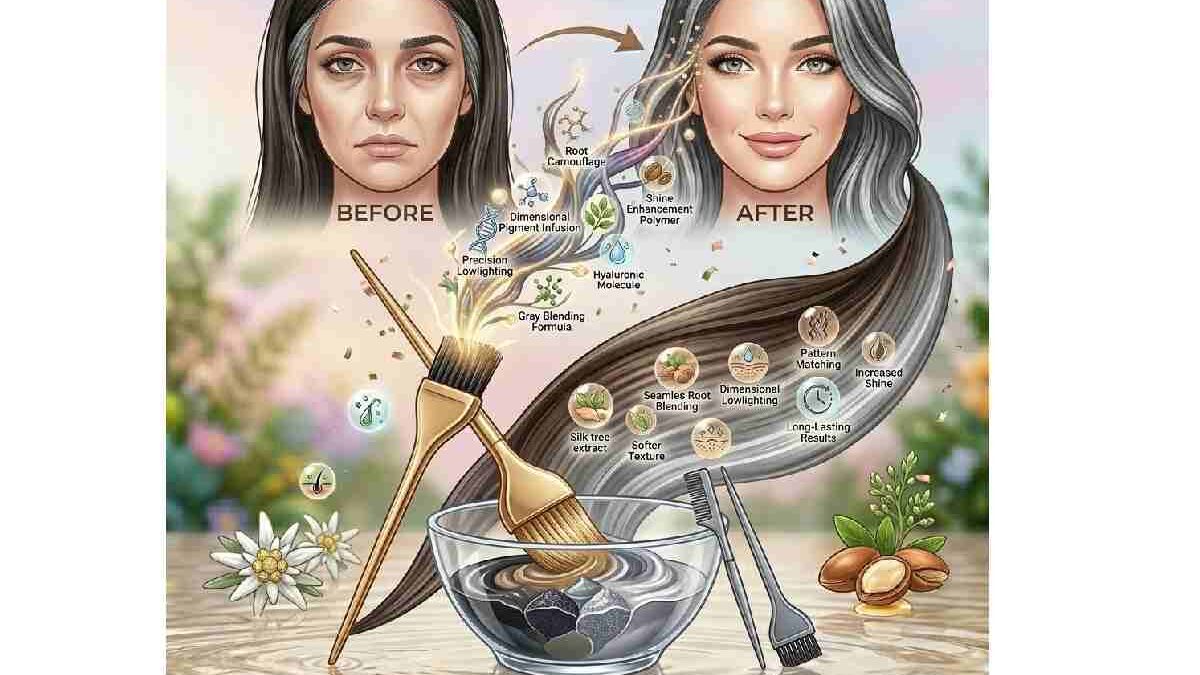

Not long ago, covering gray hair was the only option most people considered—especially for those with naturally dark hair. Root touch-ups every few weeks, heavy dyes, and obvious regrowth lines were just part of the routine.
But in 2026, things have changed. Across the United States, a new approach is taking over: gray blending.
Instead of hiding grays completely, this technique softens the contrast between natural dark hair and silver strands, creating a more natural, dimensional look. The result? Hair that looks intentional, modern, and significantly easier to maintain.
If you’re tired of constant salon visits or want a softer transition into gray, this guide will walk you through everything you need to know.
For those who want to refresh their hair color between salon visits, a color-depositing conditioner for gray hair may help tone unwanted warmth or add temporary color, depending on the product formula and shade.
Table of Contents
What Is Gray Blending?
Gray blending is a coloring technique that mixes your natural hair color with gray strands using highlights, lowlights, toners, or glosses.
Instead of full coverage, it creates a balanced, multi-tonal effect that reduces the harsh line between dyed hair and regrowth.
Gray Blending vs Traditional Dye
| Feature | Gray Blending | Full Coverage Dye |
|---|---|---|
| Look | Natural, dimensional | Solid, uniform color |
| Maintenance | Low | High |
| Regrowth Line | Soft | Harsh |
| Salon Visits | Every 8–12 weeks | Every 3–5 weeks |
The goal is not to erase gray—but to blend it beautifully.
Why Gray Blending Works So Well on Dark Hair
Dark hair tends to show gray strands more clearly because of the strong contrast. That’s why traditional dye often looks harsh as it grows out.
Gray blending solves this problem by:
- Breaking up solid dark color
- Adding lighter tones that match gray strands
- Creating a seamless transition
This makes gray hair look like part of your style—not something you’re hiding.
Gray blending can be customized to complement your natural hair color and overall look; if you are exploring warmer shades, learn more about ginger tones in dark hair and how they can influence your color choices.
Popular Gray Blending Techniques in the U.S.
Hair stylists across the country use several methods depending on your hair type, color, and desired look.
Balayage for Gray Blending
Balayage involves hand-painting lighter tones onto the hair.
Why it works:
- Creates soft, natural highlights
- Blends gray seamlessly
- Grows out without harsh lines
Best for subtle, sun-kissed blending.
Highlights and Lowlights
A mix of lighter and darker strands is added to mimic natural variation.
Benefits:
- Adds depth and dimension
- Camouflages gray strands
- Works on all hair lengths
Ideal for structured, polished looks.
Root Smudge / Shadow Root
A darker tone is applied near the roots to soften regrowth.
Benefits:
- Reduces contrast
- Extends time between salon visits
Great for transitioning from full dye to gray blending.
Silver Toning
A toner is used to enhance gray or silver tones.
Benefits:
- Makes gray look intentional
- Reduces yellow/brassy tones
Perfect for embracing natural gray shades.
Best Gray Blending Styles for Dark Hair
As gray hair progresses, some strands may eventually become white, which can affect the contrast and final appearance of a blending technique. Read more about why hair turns white to better understand this natural change in hair pigmentation.
Style Ideas
| Style | Description | Best For |
|---|---|---|
| Soft Ash Balayage | Cool-toned highlights | Subtle blending |
| Salt-and-Pepper Blend | Even gray distribution | Natural look |
| Face-Framing Highlights | Brightens around face | Instant refresh |
| Smoky Brunette | Deep, cool tones | Modern style |
| Silver Ombré | Gradual lightening | Bold transition |
Cost of Gray Blending in the United States
Pricing depends on salon location, stylist experience, and technique.
Average Cost
| Service | Price Range |
|---|---|
| Partial Highlights | $100 – $180 |
| Full Balayage | $150 – $300 |
| Toner/Gloss | $50 – $100 |
| Full Gray Blending Session | $200 – $400+ |
High-end salons in cities like New York or Los Angeles may charge more.
Maintenance & Upkeep
One of the biggest advantages of gray blending is how low-maintenance it is.
Maintenance Comparison
| Routine | Frequency |
|---|---|
| Salon Visit | Every 8–12 weeks |
| Toner Refresh | Every 6–8 weeks |
| At-Home Care | Weekly |
Best Products for Maintaining Gray Blended Hair
To keep your color looking fresh:
- Purple shampoo (neutralizes brassiness)
- Sulfate-free shampoo (protects color)
- Deep conditioning masks
- Heat protectants
These help maintain shine and prevent fading.
Common Mistakes to Avoid
| Mistake | Why It Matters |
|---|---|
| Going too light too fast | Can damage hair |
| Skipping toner | Leads to brassiness |
| DIY bleaching | Risk of uneven color |
| Overwashing | Fades color quickly |
Who Should Try Gray Blending?
Ideal For
- People with dark hair and visible grays
- Those tired of frequent root touch-ups
- Anyone wanting a natural, modern look
Not Ideal For
- Those wanting full gray coverage
- People who prefer bold, solid color
Why Gray Blending Is Trending in the U.S.
Gray blending reflects a broader beauty shift:
- Embracing natural aging
- Preference for low-maintenance routines
- Move toward personalized hair color
It’s not just a trend—it’s a mindset change.
Final Verdict
Gray blending is one of the most practical and stylish hair trends in the United States today—especially for those with dark hair.
It offers:
- A softer, more natural appearance
- Less frequent salon visits
- A modern, effortless look
Rating: 4.8/5 for versatility and practicality
Conclusion
If you’ve been stuck in the cycle of constant root touch-ups, gray blending offers a refreshing alternative. It allows you to embrace your natural hair while still looking polished and intentional.
The best part? It grows out beautifully—meaning less stress, less maintenance, and more confidence.
Final Takeaway
- Gray blending softens contrast in dark hair
- It’s lower maintenance than full dye
- Works with your natural gray—not against it
The goal isn’t to hide gray anymore—it’s to make it look stunning.
