
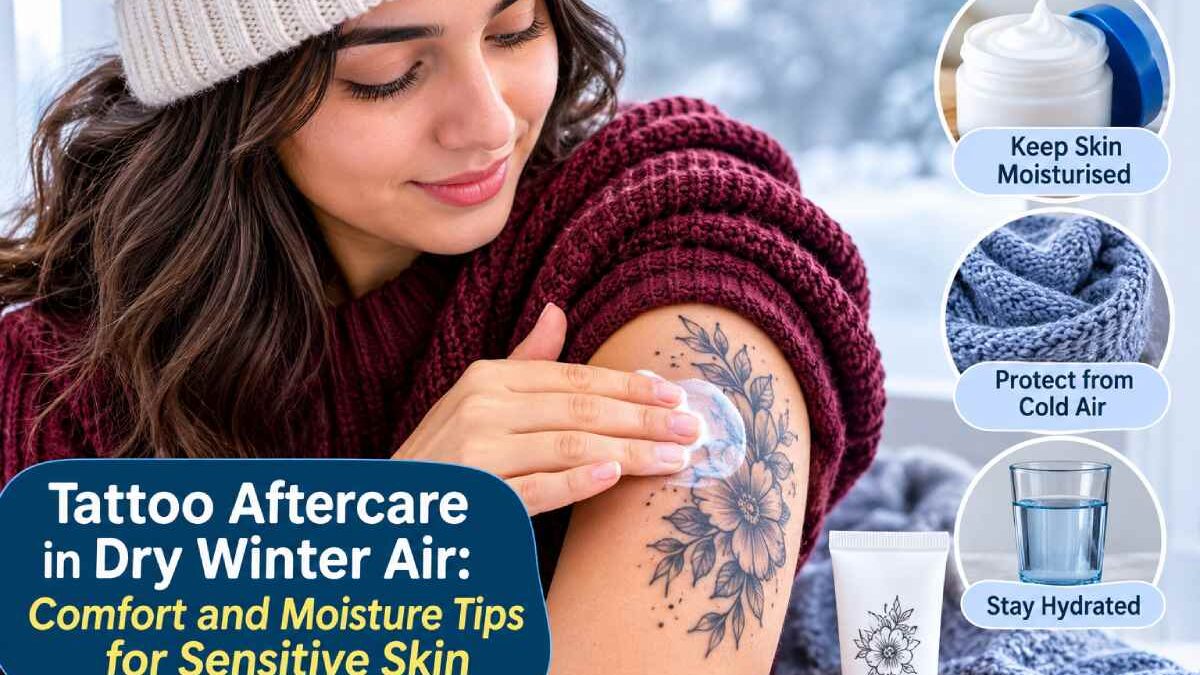
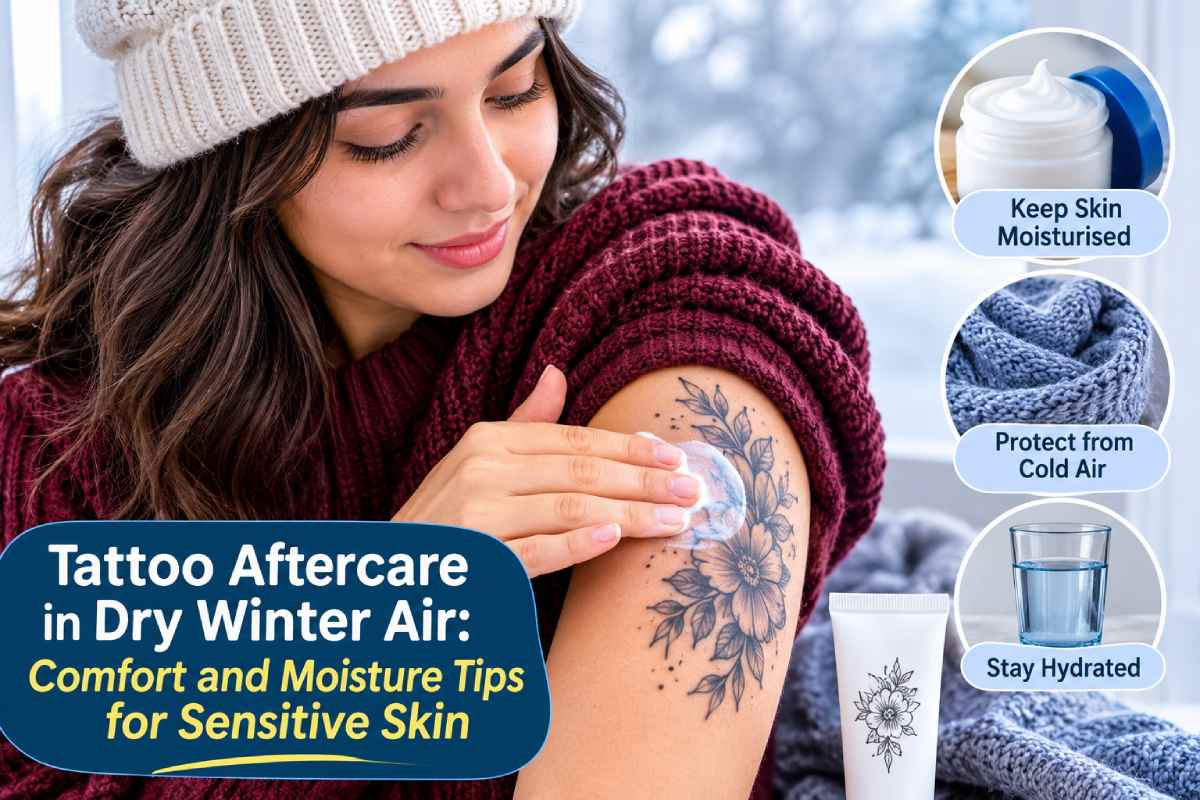
A new tattoo in January can feel very different from one you got in July. Cold wind, indoor heat, and dry air leave a lot of skin feeling tight, and a fresh tattoo is already going through a settling period. If your skin is on the sensitive side, winter simply asks a little more of your aftercare routine.
I’m Minesh Patel, founder of Eczema Honey and a dad whose kids have eczema-prone skin. Our kids have taught me a lot about dry, reactive skin. I’m not a tattoo artist, and nothing here replaces the aftercare plan your artist gives you. This is general information, not medical advice. If you have eczema, psoriasis, known allergies, or you take prescription medicine for your skin, check with your dermatologist before and after getting tattooed.
Table of Contents
Your artist’s aftercare comes first
Every studio has its own plan: how long to keep the first covering on, when to wash, and which ointment or moisturizer they want you to use. Follow that plan. Your artist knows the ink, the placement, and the technique they used. If you have sensitive skin, mention it before the appointment, including eczema-prone patches, product allergies, or past reactions to tape or strongly scented products.
Why winter air makes new ink feel tighter
In winter, moisture leaves the surface of the skin more quickly because outdoor air is dry and indoor heat dries it further. A new tattoo can feel tight, flaky, or itchy sooner than it would in humid weather. That does not automatically mean something is wrong with your tattoo. It usually means sensitive skin in dry winter air needs a little more consistency.
Wash gently, and use a light layer of moisturizer
When your artist says it’s time to wash the tattoo, use lukewarm water, not hot, and a mild, simple cleanser you already tolerate. A fresh tattoo is not the time to try a new scented body wash. Wash with clean hands, pat the area dry with a clean paper towel or a soft towel, and skip rubbing.
Once your artist says a simple moisturizer is okay, use a thin layer, as often as they suggest. A heavy coat can trap heat and sweat, which can bother sensitive skin. In our house we like a solid lotion stick because a thin layer is easy to apply with clean hands. Our Gentle Face and Body Lotion Stick (https://eczemahoneyco.com/products/eczema-honey-gentle-face-and-body-lotion-stick) is one option we use on everyday skin; only use it on a tattoo if your artist is comfortable with that kind of product and the tattoo is ready for regular moisturizer. Keep strongly scented lotions and “cooling” balms off a fresh tattoo.
Protect new ink from cold wind and scratchy fabrics
Cold wind can leave exposed skin feeling raw and tight, so cover the area with a loose, soft layer when you go outside, such as a cotton long sleeve. Tight waistbands, wool, stiff denim, and scratchy seams can also make the area feel worse. Choose loose, breathable layers with a soft fabric against the skin, and wash anything that will touch the tattoo in a mild detergent you already know agrees with you.
Give indoor air a little help
Most of the winter day is spent inside, and indoor heating can be surprisingly drying. We wrote more about that in our note on indoor heating and eczema-prone skin (https://eczemahoneyco.com/blogs/post/indoor-heating-and-eczema). Point heater and car vents away from the tattooed area, run a clean humidifier in the bedroom if you have one, keep showers short and lukewarm, and moisturize soon after washing once your artist says you can.
Itching is common. Check in if anything seems off
Itching is a normal part of the settling process, and dry winter air can make it feel more intense. Scratching or picking at flakes can irritate the area and change how the tattoo looks once it settles. Instead, try gently pressing or lightly tapping near the itchy spot with clean hands, and wear a loose, soft sleeve to bed so the tattoo is not rubbing on sheets.
Most tightness and itch is temporary. Call your artist, and see a doctor, if you notice redness, swelling, or warmth that keeps getting worse after the first few days; pus, a bad smell, fever, or chills; a rash or intense itching that spreads beyond the tattoo; or raised, itchy, or painful skin in one ink color, even later on. If you have eczema-prone skin and notice a flare near the tattoo, let your dermatologist know rather than guessing.
About the author
Minesh Patel is a dad whose kids have eczema-prone skin and the founder of Eczema Honey, a family skincare company started in Hayward, California, in 2017.